
Why Falls Are Rarely “Just an Accident”—and What They Really Mean

Juliet Gaisey, MD
Board-Certified Physical Medicine & Rehabilitation Physician

Falls are one of the leading causes of injury, hospitalization, and loss of independence among older adults and individuals with mobility impairments. While they are often described as “accidents,” this term can be misleading and may obscure the underlying clinical reality.
In most cases, falls are not random events. Rather, they are the result of multiple interacting factors that develop over time and ultimately compromise stability and safety.
Common contributors to falls include muscle weakness, impaired balance, gait abnormalities, sensory deficits such as peripheral neuropathy, chronic pain, and adverse medication effects. Environmental factors, including poor lighting, clutter, and uneven surfaces, may further increase risk.
Following a fall, medical evaluation often focuses on identifying acute injuries such as fractures or head trauma. While this is appropriate and necessary, it does not address the underlying causes that predisposed the individual to fall in the first place.
Without addressing these contributing factors, patients remain at high risk for recurrent falls. Repeated falls are associated with progressive functional decline, increased morbidity, and a loss of independence.
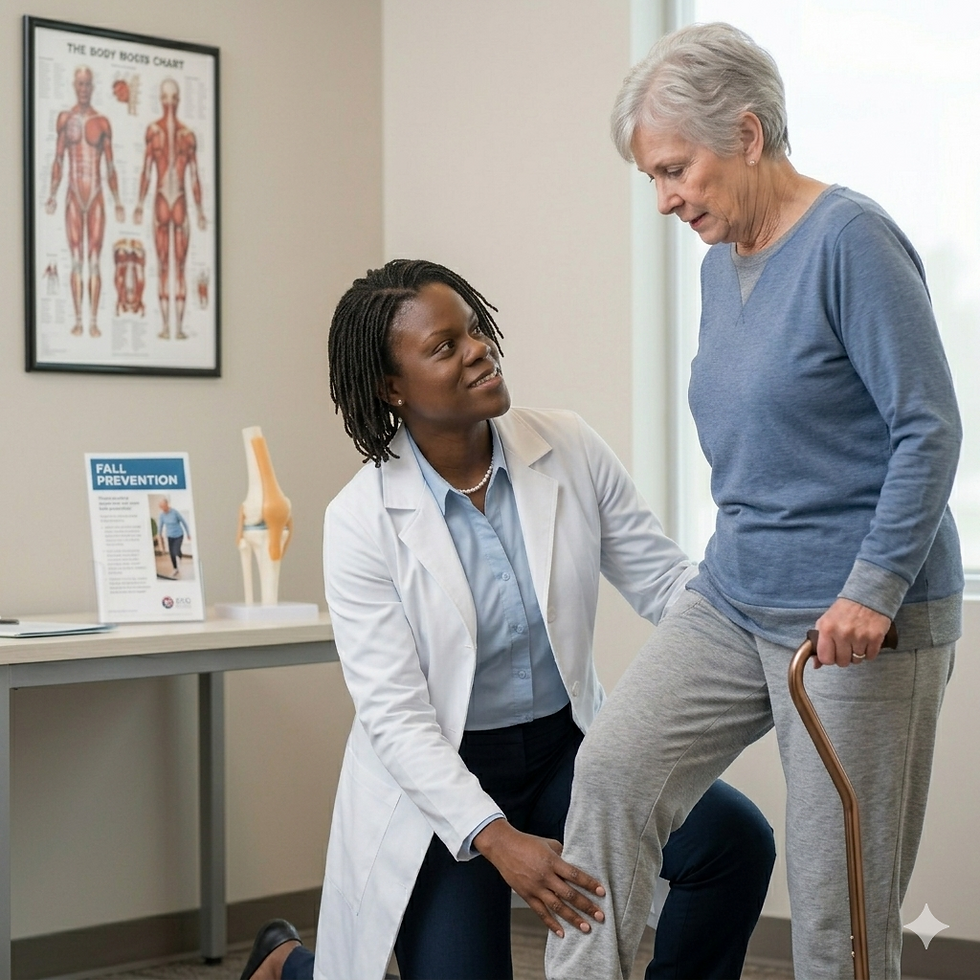
A comprehensive fall evaluation should include detailed assessment of gait, lower extremity strength, balance, coordination, and functional mobility. A review of medications and comorbid conditions is also essential.
For patients receiving care in the home, environmental assessment is particularly important. Evaluating the home setting allows for identification of hazards and implementation of targeted modifications to improve safety.
Importantly, falls are often preventable. Interventions such as strength and balance training, medication optimization, pain management, and environmental modifications can significantly reduce risk.
A fall should be viewed as a clinical warning sign rather than an isolated event. Early identification and intervention can help prevent recurrence and preserve independence.
Serving Clinton Township, Macomb County, and Metro Detroit
(586) 275-7044
References:
Tinetti ME, Kumar C. Falls in older persons. N Engl J Med. 2010.
CDC STEADI Initiative.
AAPM&R Mobility and Fall Risk Guidelines.
Rehabilitation Guidelines.


Comments